Jason Wright

Open to new roles Senior / Principal Frontend Engineer · Tokyo → London, 2026

Senior frontend engineer with 8+ years building and modernising large-scale web applications in React, TypeScript, and Next.js, supported by 7 years of earlier business leadership at Amazon.

Alongside product engineering, I take on selected web design and frontend consulting projects for small businesses and product teams.

Work

Vimeo

2021 - 2026

Principal Engineer

Led frontend architecture and delivery across Vimeo's core viewing platform and product workflows, improving performance, simplifying legacy systems, and enabling faster execution across globally distributed teams.

Highlights
  • Rebuilt Vimeo's primary video viewing surface for 1.5M daily users and 45M monthly visits with a modular architecture of composable layouts, reusable UI primitives, and data-layer hooks, enabling rollout across core video pages, Showcase 2.0, and a bespoke China experience.
  • Served as Technical Lead for Showcase 2.0 across teams in the US, Europe, and India, pivoting the technical approach mid-project after major requirement changes and still delivering on time with strong product reception.
  • Led a self-initiated multi-quarter audit and improvement roadmap for Video Settings, removing 13,293 lines of code, reducing page load from 8.16s to 4.67s (-42.77%), and cutting bundle size from 1.68MB to 1.42MB (-15.5%).
  • Improved key workflow surfaces including Upload, Video Settings, Global Navigation, Embed, and Distribution, addressing issues in quota limiting and upsell logic to strengthen conversion-related flows.
  • Contributed 50% of capacity to Frontend Platform and Design System work, supporting Vimeo's Chakra-based system through components, documentation, implementation guidance, and adoption support.
  • Mentored engineers across teams and contributed to the Frontend Reviewers group, producing prototypes, walkthroughs, and structured documentation to improve reuse and onboarding.
  • Integrated AI-assisted and agentic workflows into engineering practice for planning, scoping, prototyping, and delivery support, while maintaining strong human review and code quality standards.
  • React
  • TypeScript
  • Next.js
  • Zustand
  • Playwright
  • React Testing Library
  • Datadog
  • Chakra UI
  • Design Systems
  • Performance
  • AI / Agentic Workflows

Consultant Engineer - Senior frontend

Joined Vimeo following the acquisition of WIREWAX and led the rebuilding of the Interactive Studio platform for Vimeo customers, establishing architectural foundations, tooling, and engineering practices for a key product area.

Highlights
  • Scaffolded a greenfield frontend platform with tooling, code style, localisation, testing foundations, and engineering best practices for a complex interactive video product featuring timeline-based editing and visual design tooling.
  • Led the Create React App to Next.js migration, including routing redesign, authentication simplification, SSR compatibility updates, and build pipeline reconfiguration, delivering with zero production issues.
  • Partnered closely with product and design through discovery, prototyping, and implementation to improve UX quality and reduce delivery risk.
  • Operated across engineering, QA, planning, and product delivery responsibilities to maintain momentum and hit strict post-acquisition deadlines with limited resources.
  • React
  • TypeScript
  • Next.js
  • Jest
  • Storybook
  • Localisation
  • SSR

WIREWAX

2017 - 2022

Lead Front End Developer

Led frontend development for an interactive video SaaS platform spanning digital asset management, timeline-based editing, and visual design tooling.

Highlights
  • Owned frontend architecture, tooling decisions, coding standards, and best practices across a complex React and Redux application.
  • Led development of the overlay editor, an infinite-canvas web editor allowing users to add shapes, text, images, video galleries, and animations to their interactive videos.
  • Sole developer for wirewax.com, the company's front-of-house site and blog, built with Gatsby and a WordPress headless CMS with a strong focus on design, performance, SEO, and customer acquisition.
  • Core contributor to the interactive video player using React, Redux, Jest, Storybook, and video.js.
  • Helped establish more maintainable frontend workflows through improved tooling, testing practices, and reusable UI patterns.
  • React
  • Redux
  • JavaScript
  • Gatsby
  • WordPress
  • Jest
  • Storybook
  • video.js

Junior Front End Developer

First professional engineering role, contributing to a live interactive video platform while building strong production foundations in React, Redux, and JavaScript.

Highlights
  • Shipped features into a production SaaS application while developing strong habits around component structure, state management, and release quality.
  • Worked alongside senior engineers on interactive video tooling, customer-facing product surfaces, and platform maintenance.
  • React
  • Redux
  • JavaScript
  • HTML
  • CSS

General Assembly

2017

Teaching Assistant

Supported Web Development and UX courses at General Assembly, teaching HTML, CSS, and JavaScript fundamentals shortly after completing the immersive programme.

Highlights
  • Helped new developers build practical HTML, CSS, and JavaScript foundations through code reviews, troubleshooting, and one-to-one guidance.
  • Reinforced modern web fundamentals by explaining programming concepts in plain language for early-career learners.
  • HTML
  • CSS
  • JavaScript
  • Teaching
  • UX

Web Development Immersive

Twelve-week full-time web development immersive covering the programming essentials needed to launch full-stack web apps in a collaborative, industry-aligned environment.

Highlights
  • Built full-stack projects while learning programming fundamentals, collaborative workflows, and industry delivery practices.
  • Secured a developer role within one month of graduating.
  • JavaScript
  • Node.js
  • Express
  • MongoDB
  • HTML
  • CSS

Amazon / LOVEFiLM

2009 - 2016

Buying Manager UK & DE - LOVEFiLM ByPost

Progressed from Assistant Buyer to European Buying Manager across LOVEFiLM and Amazon post-acquisition, with leadership responsibility across vendor strategy, budgeting, and marketing initiatives for the UK and German markets.

Highlights
  • Managed UK and German buying teams and led negotiations with major film studios and independent distributors.
  • Designed and executed customer campaigns including a print insert reaching 1M+ Amazon retail customers.
  • Held GBP25m+ budget and P&L responsibility, contributing to business planning, roadmap development, and leadership reviews.
  • P&L
  • Forecasting
  • Negotiation
  • Leadership
  • Roadmapping

Buying Manager Nordics - LOVEFiLM By Post

International assignment in Gothenburg leading buying operations and supplier relationships across the Nordic film market.

Highlights
  • Managed regional buying activity while adapting planning, communication, and negotiation practices across markets.
  • Market Planning
  • Supplier Management
  • Forecasting

Buyer / Assistant Buyer

Early commercial career at LOVEFiLM, progressing from Assistant Buyer to Buyer through data-driven purchasing decisions and stronger studio relationships.

Highlights
  • Owned relationships with three major film studios and the ten largest independent distributors.
  • Developed forecasting models to reduce costs and consistently improve KPI performance.
  • Forecasting
  • Data Analysis
  • Vendor Management
  • KPI Reporting

Projects

Cedar UI - Design System

Published
Visit

An accessible, themeable React design system — built on a framework-neutral token pipeline, published to npm, and designed to be consumed by AI agents as well as people.

  • React
  • TypeScript
  • React Aria
  • Style Dictionary
  • CSS Modules
  • Storybook
Details

Cedar is a design system I built to explore both creating a design system from scratch and making it agent ready. It ships as two published npm packages: @jwrighty/cedar-tokens, a framework-neutral DTCG token source compiled by Style Dictionary into CSS custom properties and typed exports, and @jwrighty/cedar-react, components built on React Aria and styled with CSS Modules against those tokens. The result is end-to-end ownership of the whole seam: tokens, components, theming, tests, CI, release, and a hosted Storybook.

The architecture is deliberate and documented in a set of ADRs. Tokens are layered in three tiers — base, semantic, and component — so the entire UI can be re-skinned at runtime by swapping a single data-theme attribute, with light, dark, and a brand theme driven purely by CSS custom properties. Components lean on React Aria for accessibility rather than reinventing it, and every component is covered by unit and accessibility tests. Releases run through Changesets, publishing the bumped packages to npm and the gallery to Chromatic.

The angle I find most interesting is making Cedar consumable by AI coding agents, not just people. Each component carries co-located usage metadata — when to use it, when to reach for something else, accessibility notes, related components — as a single source of truth that feeds both human docs and machine-readable artefacts like an llms.txt, a generated manifest, and an MCP server. The aim is to stop agents hallucinating APIs, misusing components, or hardcoding values that should come from the token scale.

Cedar Observe

In development
Visit

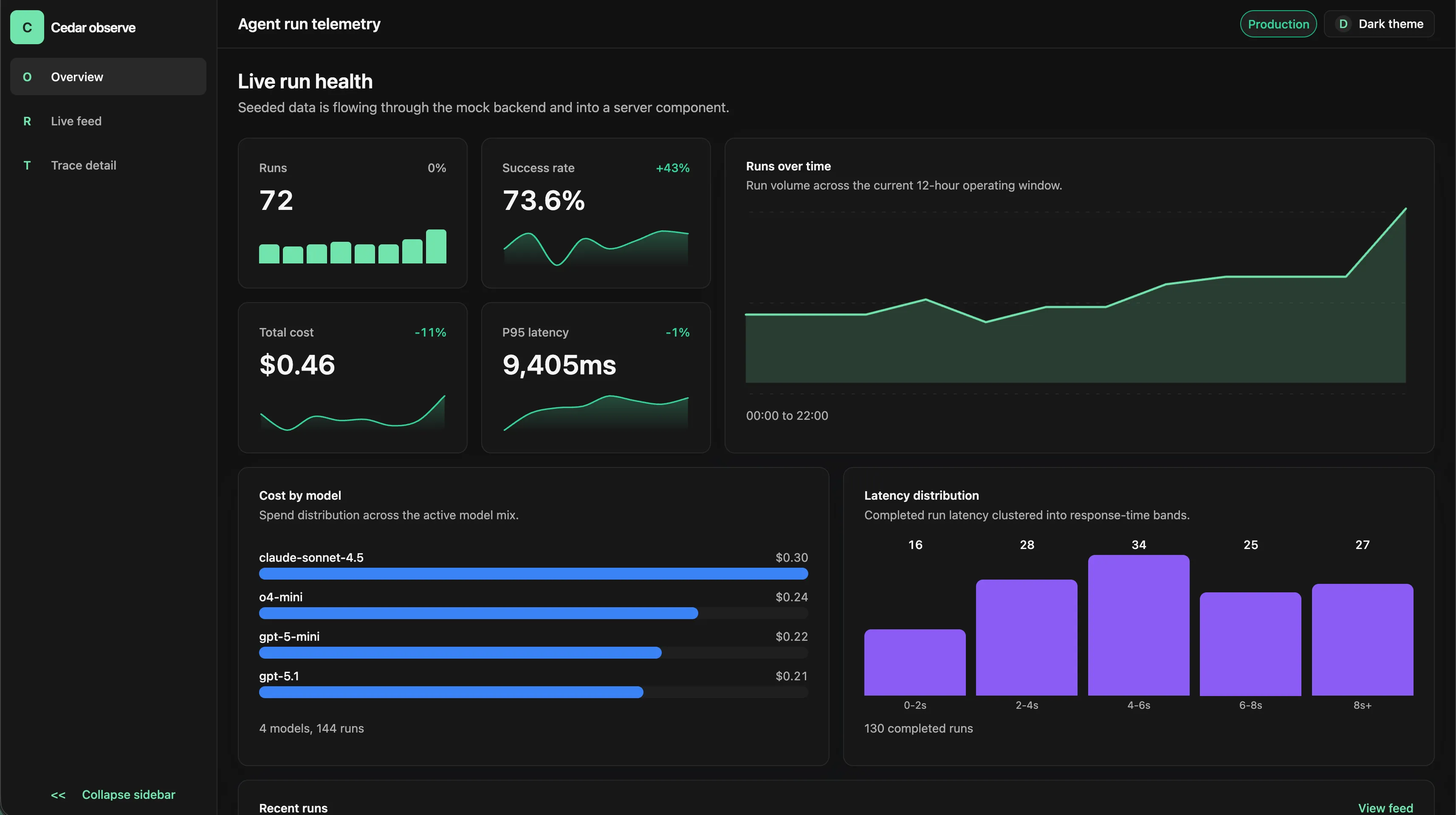
An LLM/agent observability dashboard — a demo built on my own Cedar design system, where the choreography of data arriving is the whole point: RSC streaming, Suspense, and motion-led loading.

  • Next.js
  • React 19 (RSC)
  • TypeScript
  • TanStack Query & Table
  • visx
  • Framer Motion
  • Cedar
Details
Cedar Observe interface

Observe is a demo LLM/agent observability dashboard, built as the flagship consumer of my own Cedar design system and as a way to demonstrate my UI and motion craft. The domain is chosen deliberately: streaming is native to the data, so the modern-React demos are real rather than contrived, and an agent trace is a literal waterfall — the loading choreography and the data visualisation turn out to be the same shape.

The thesis of the piece is that the choreography of data arriving is craft worth foregrounding. Each of the three surfaces demonstrates a distinct loading pattern inside a persistent dashboard shell: an Overview of RSC-streamed aggregates whose per-widget Suspense boundaries resolve in a deliberately tuned order so you read the most important numbers first; a live feed — a virtualised table that appends new runs over SSE with one optimistic mutation; and a trace detail span waterfall that draws in as the trace “executes,” with token-by-token streaming in the message panel, opened as a shared-element overlay and deep-linkable as a full page. Skeletons occupy the exact final size, so content fades in without anything shifting under your eyes.

All the data is mocked by a seeded, deterministic generator feeding Next route handlers with tuned latencies — so the demo is reproducible and the resolution order is itself a design decision, and the same generator backs the tests and Storybook.

ds-bench

Published

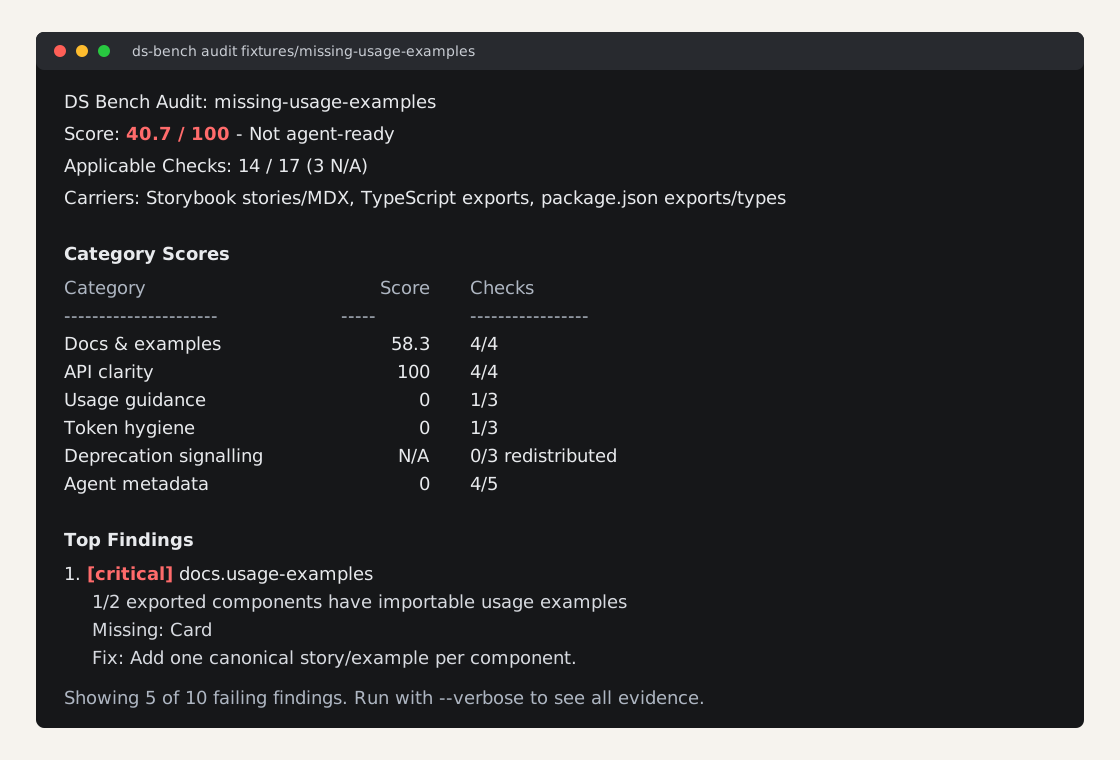
A static CLI audit that scores how ready a design system is for AI coding agents.

  • TypeScript
  • Node.js
  • CLI
  • Design Systems
  • Developer Tools
Details
ds-bench interface

While building Cedar to be agent-ready, I found the field had plenty of advice scattered across posts, talks, and other systems’ write-ups — but no way to measure a system, track progress, or turn those learnings into concrete recommendations. ds-bench is that instrument.

AI coding agents fail against design systems in predictable ways — invented props, wrong import paths, recreated components, hardcoded values, deprecated patterns. ds-bench turns the signals that prevent those failures into a measurable score.

npx ds-bench audit <path> statically analyzes a local design-system checkout — no AI, no network, deterministic — and produces a 0–100 Agent-Readiness Score across six weighted categories (docs & examples, API clarity, usage guidance, token hygiene, deprecation signalling, agent metadata). Findings are severity-ranked, each with a concrete fix and a “receipt”: a citation to the documented agent-failure mode the check prevents. The report is a to-do list, not a judgment — fix, re-run, measure the delta via the versioned JSON contract.

The methodology is published with the tool: a versioned rubric (ARS v0.2, 22 checks) calibrated against audits of Material UI, Chakra UI, Shopify Polaris, and Cedar, with the PRD, architecture decision records, check rationale, and pilot reports all in the repo.

Keelty Master Thatcher

Live
Visit

A warm, heritage-led website for a traditional master thatcher — service storytelling, a project gallery, and clear contact paths, built from the ground up.

  • Astro
  • React
  • TypeScript
  • Tailwind CSS
  • Framer Motion
Details
Keelty Master Thatcher interface

Keelty Master Thatcher is a site I built from the ground up for a traditional thatching business. The focus was a warmer, more tactile visual identity that keeps the craft itself centre stage, paired with a real emphasis on SEO and performance — fast loads, clean semantics, and strong Lighthouse scores across the board.

The site leads with service storytelling — re-thatching, re-ridging, and maintenance — backed by a gallery of completed work across the West Country, client trust signals, and direct contact paths. The visual system stays restrained so the photography of the trade does the heavy lifting.

Built with Astro, styled with Tailwind CSS and Radix UI primitives, with Framer Motion for considered, lightweight motion.

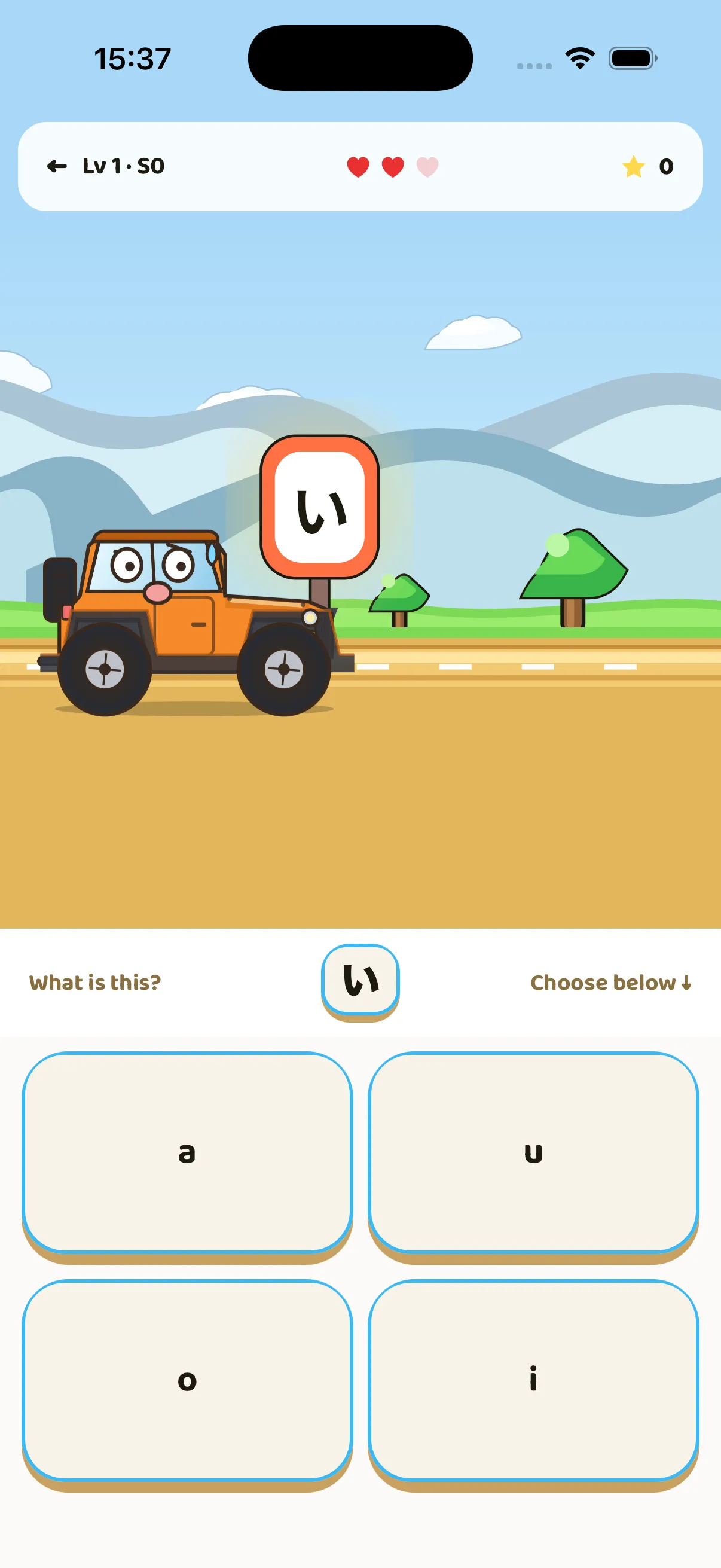
Kana Drive

In development

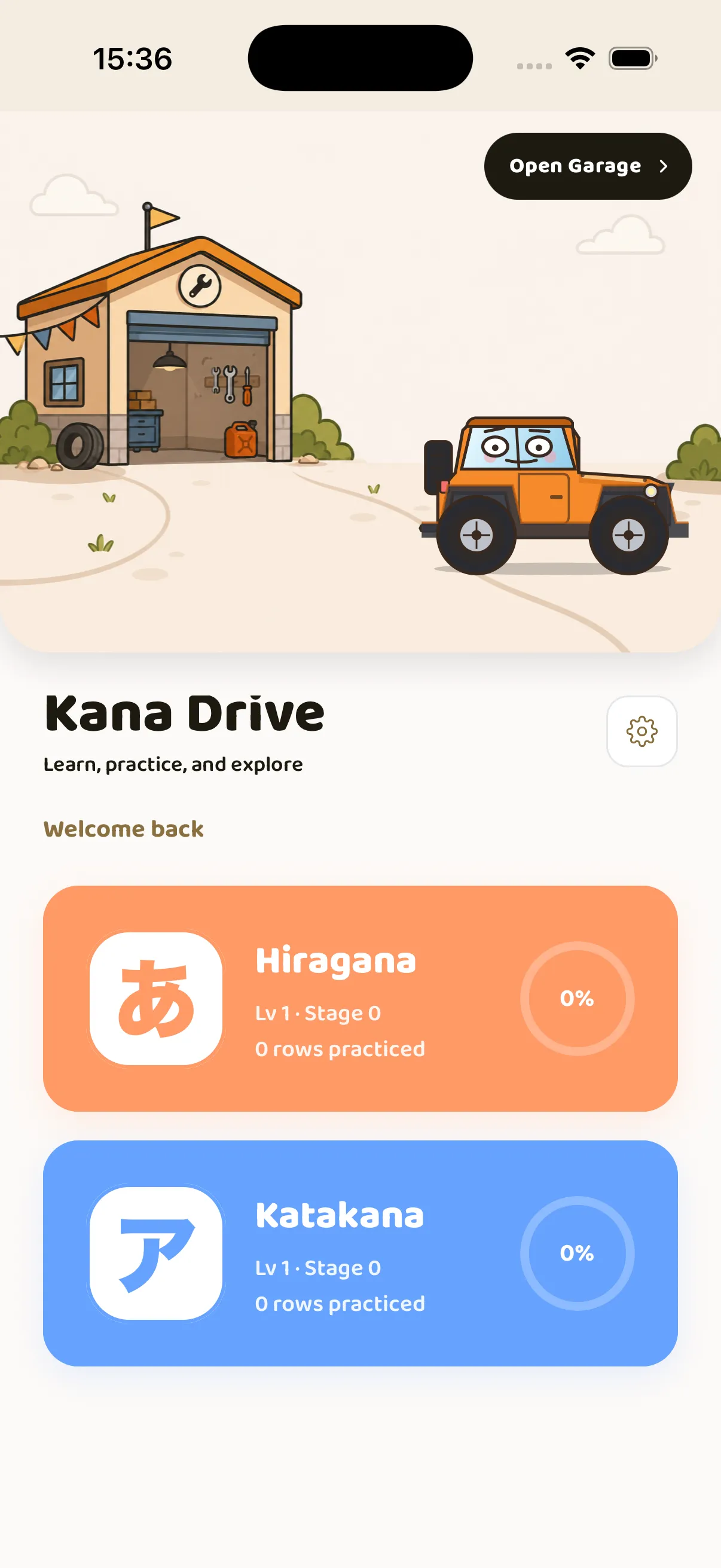
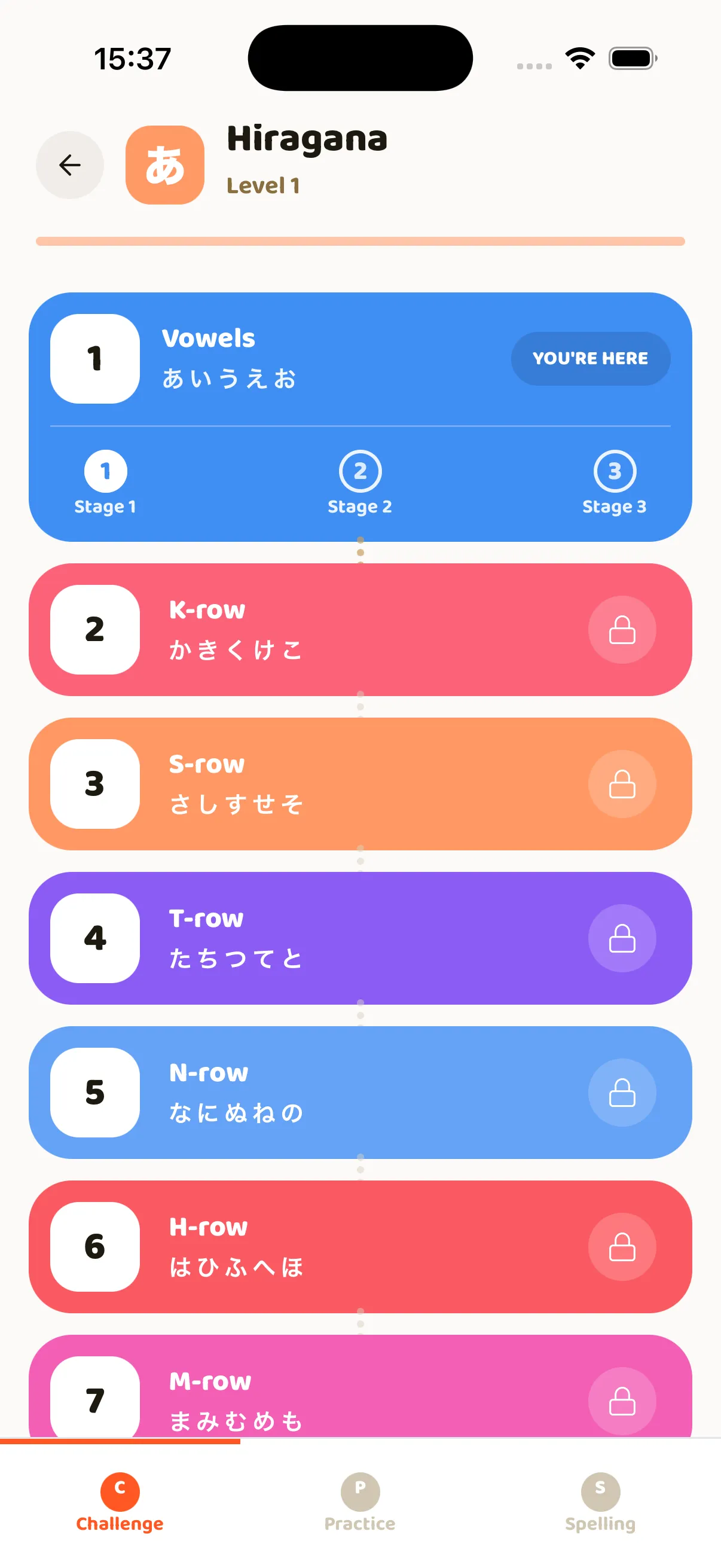
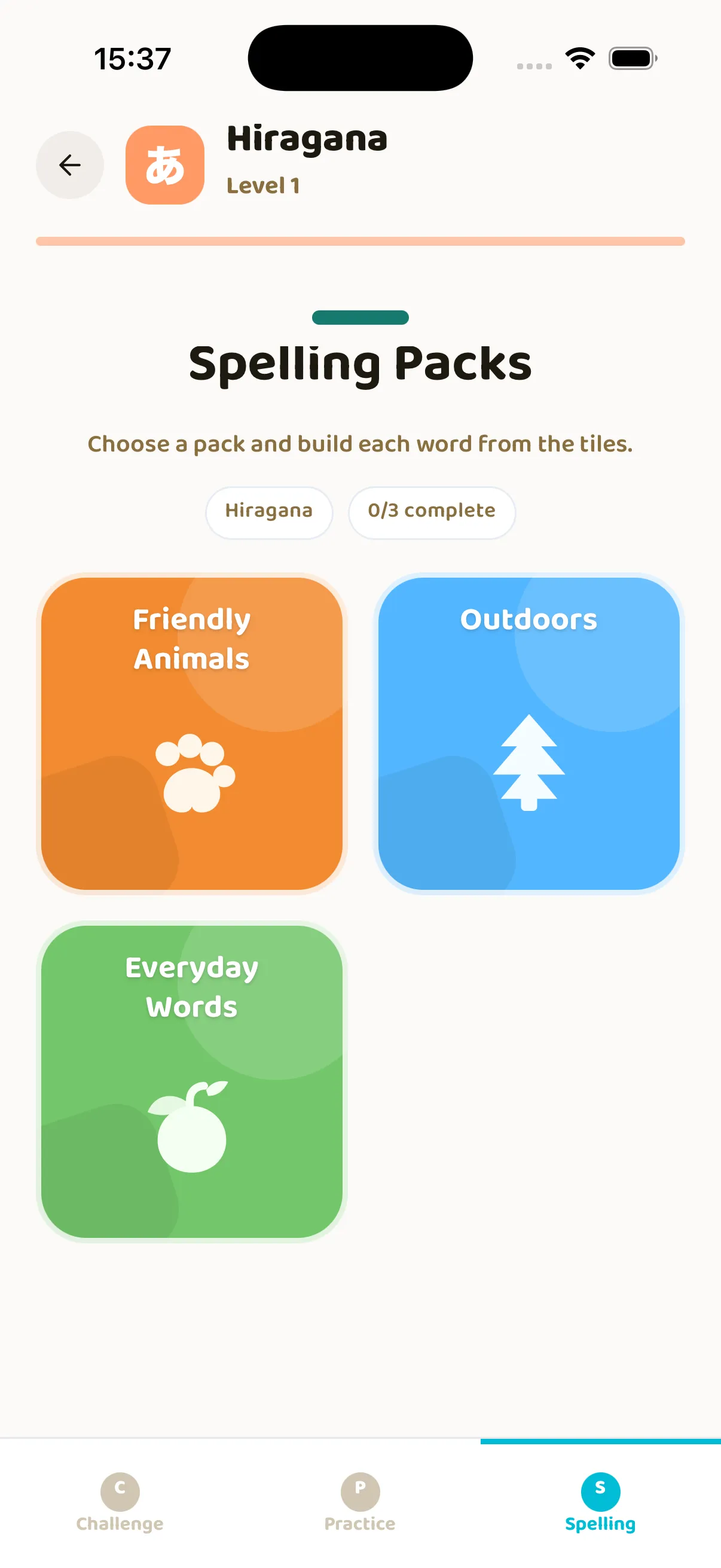
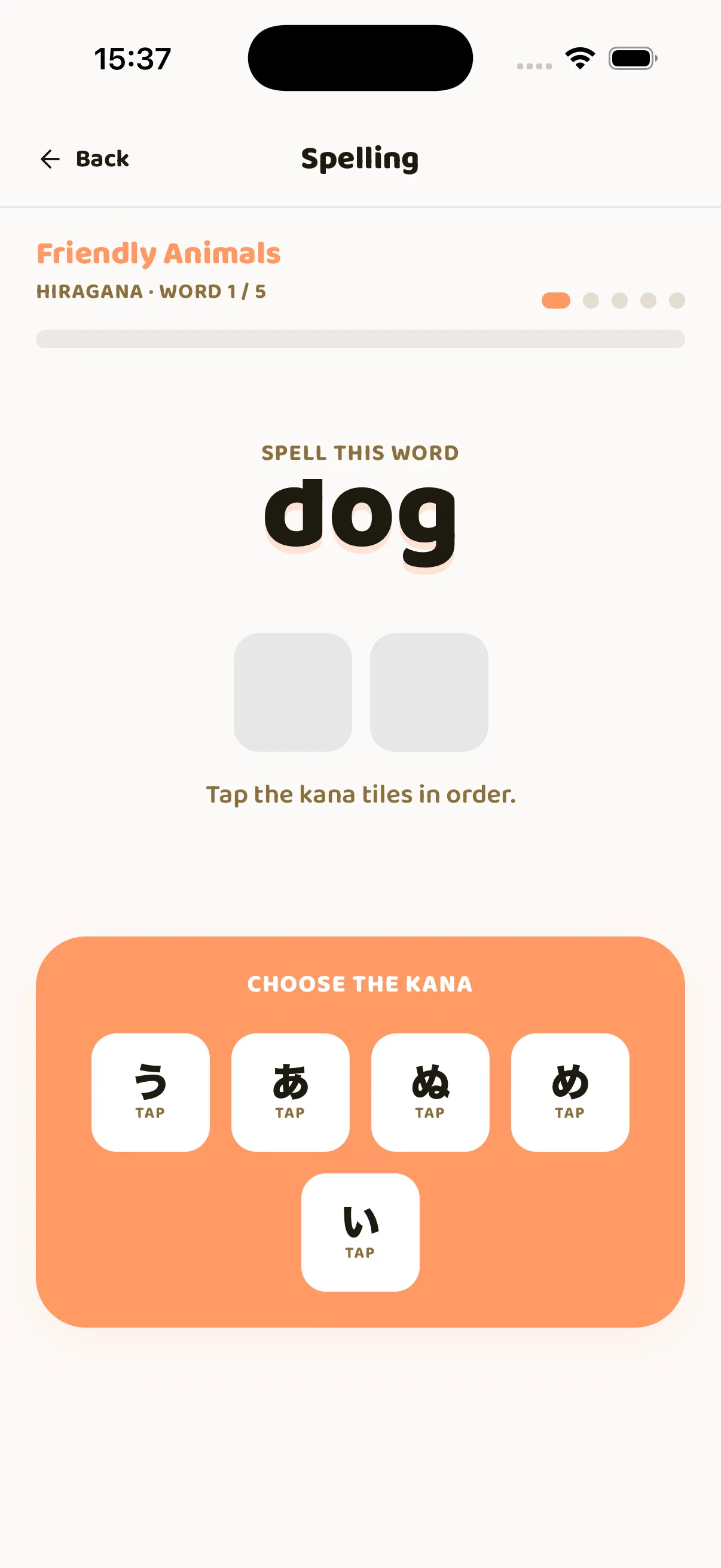
A React Native and Expo learning game for practicing hiragana and katakana through fast, playful driving sessions.

  • Expo
  • React Native
  • TypeScript
  • Skia
  • Zustand
  • Vitest
Details
Kana Drive interfaceKana Drive interfaceKana Drive interfaceKana Drive interfaceKana Drive interface

A fun side project I am doing with my 4 year old son that leans on his love of all things 4x4 and attempts to make learning Hiragana and Katakana fun and engaging.

The project started as a personal study tool and became a way to explore how agentic workflows handle iterative product direction: changing the theme midstream, rebuilding interaction patterns, and keeping the learning mechanics legible for both adults and children. It’s also been fun to explore animations, assets, sprites etc.

It is still in active development as I go through play testing with my son. Adding features like cosmetic unlocks (think Jeep colors, roof racks, spoilers etc).

Billingual

Live
Visit

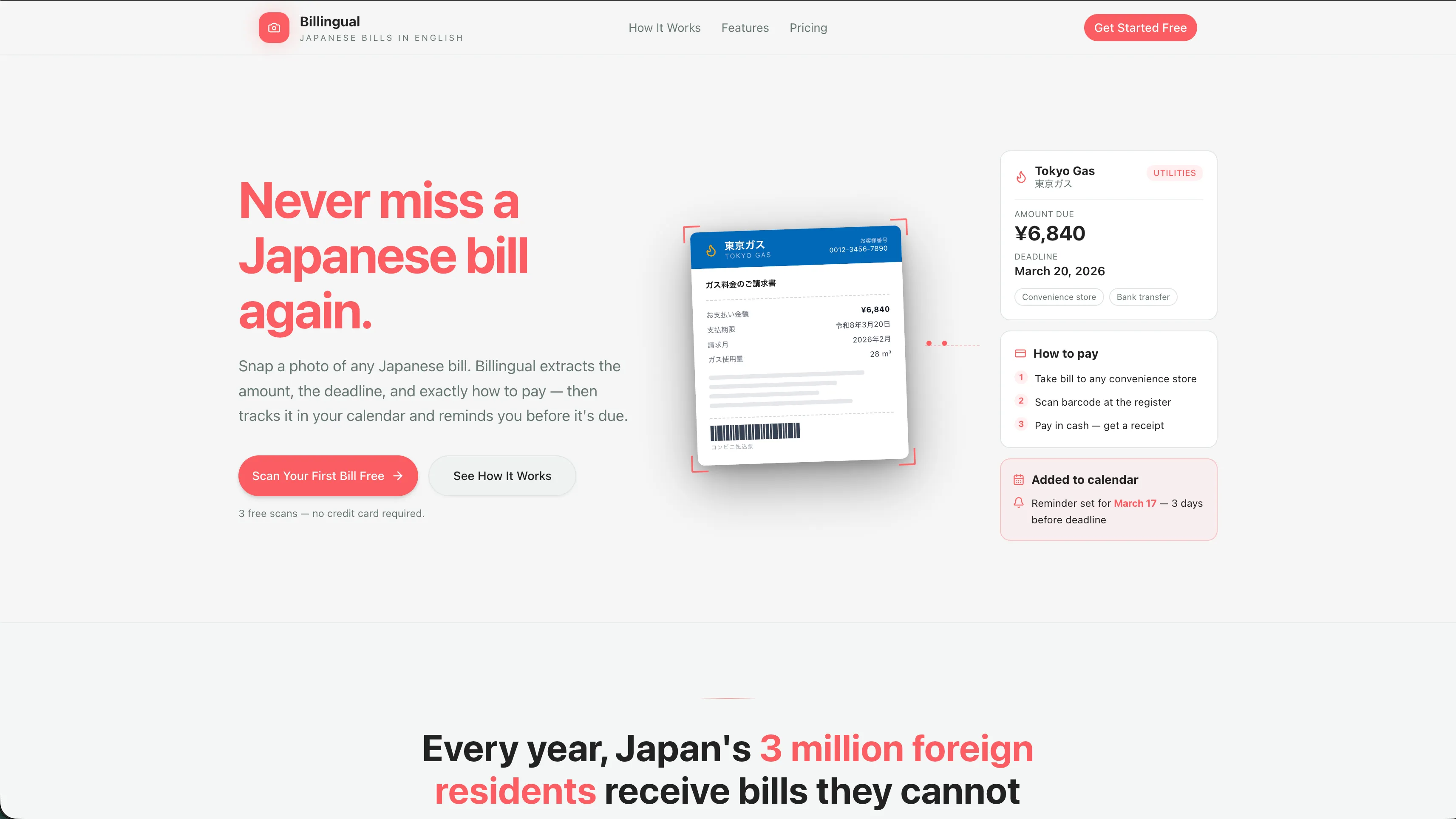
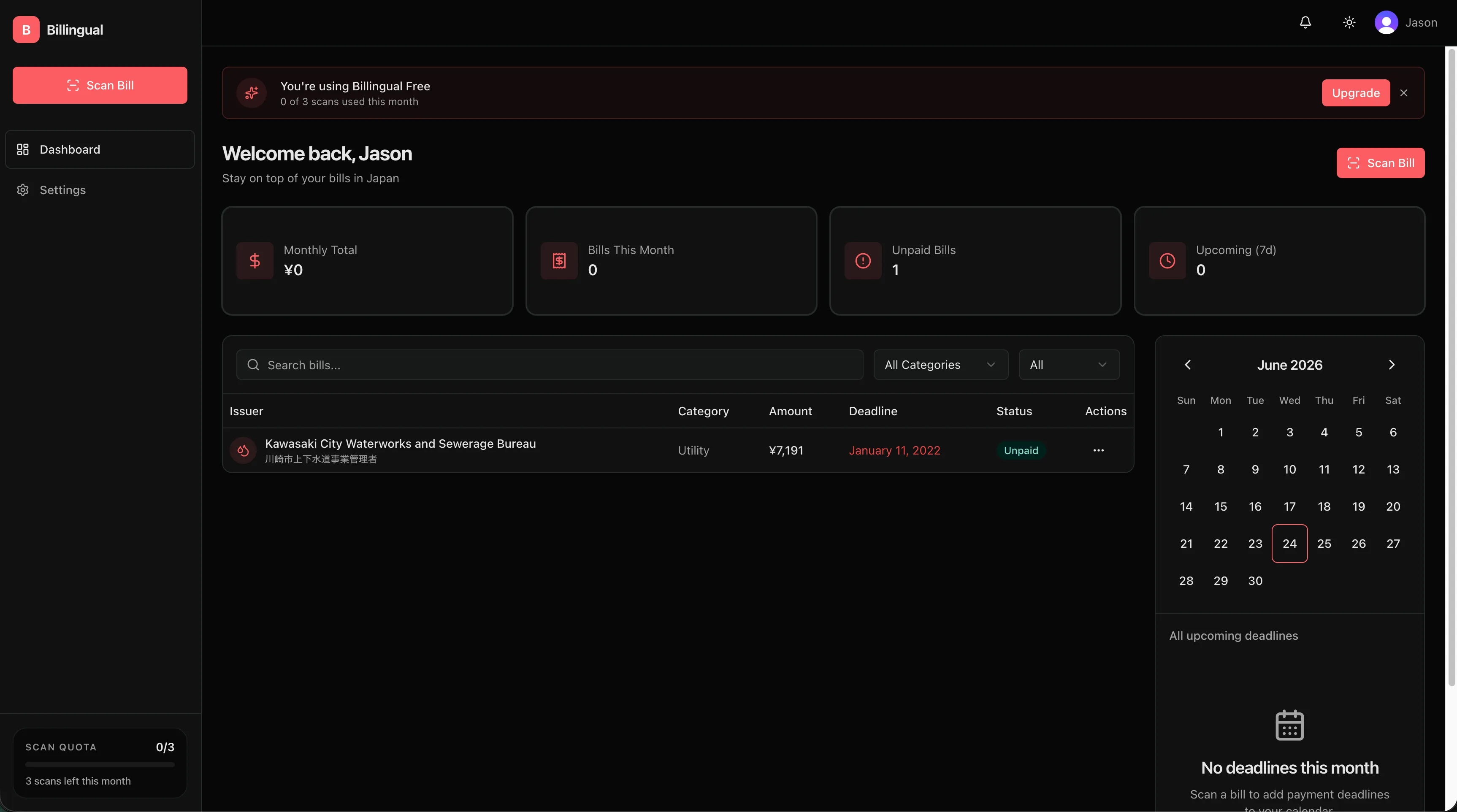
A web app for foreign residents in Japan to translate Japanese bills, extract payment details, and track deadlines — built as a full product surface for testing agentic workflows.

  • Next.js
  • React
  • Convex
  • Clerk
  • Claude Vision
  • Resend
  • Playwright
Details
Billingual interfaceBillingual interface

The app lets a user photograph a bill, extracts structured payment information with Claude Vision, explains how to pay it, and tracks upcoming deadlines with reminder emails. I built it as a full product surface for testing agentic workflows across planning, backend schema design, AI prompt constraints, UI polish, and end-to-end verification.

I leaned heavily into agentic workflows like ‘superpowers’ as well as agent teams and spec driven development. I also tested out working across Claude Code, Codex, Gemini and tools like Google Stitch for design iteration.

The current deployment is live, with planned follow-up work to remove bundled API-key assumptions, let users bring their own provider key, and open source the app as a fully free project.